A student in Nagpur finds a forty-second video at eleven at night. Something in it is genuinely useful, so they type a follow-up question into Google and read the answer at the top without clicking anything. Then they search the teacher's name. Then they ask in a WhatsApp group, where someone who sat the same exam last year replies in one line: worth it, or not worth it.
Your website comes at the end of that story, if it comes at all. And when it does, the visitor is not there to be convinced. They are there to find the fee and the start date.
Pew Research measured the middle part of this. Looking at the browsing of 900 US adults, people who saw an AI summary clicked a search result 8% of the time. Without a summary, it was 15%. They rarely clicked the listed sources either. Your institute is now being read about more than it is being read.
Infographic 1 — Four checks, not four steps
They discover you
Shorts, Reels, AI search answers
“Do these people know their subject?”
They check you are real
LinkedIn, teacher profiles, certificates
“Is this teacher real? Have they done this before?”
They ask other students
WhatsApp groups, Discord, batch forums
“Did it work for someone like me?”
They confirm and pay
Your website and admission page
“What does it cost, and when does it start?”
Each step checks the one before it
Fail any of them and the student never reaches the page you spent money on.
Step One: They Discover You in Video and AI Answers
The size of this shift in India is easy to miss. The IAMAI and Kantar Internet in India Report 2025 counts 958 million active internet users, growing about 8% a year. Of those, 588 million people, or 61%, watched short video content in 2025. Rural users slightly outnumbered urban ones, and rural growth is roughly four times faster.
Read that as a sentence about admissions. A good number of your next hundred enquiries will come from towns you have never advertised in. Their first contact with your institute will be a short video watched on a phone. A principal in Indore is now competing for that student with a teacher in Patna who owns nothing but a phone and a whiteboard.
What works there is narrow and a little boring. One concept, explained properly, by the teacher who will actually teach it. Not a drone shot of your building. Not a montage of toppers. Not a fee announcement. The video has to be useful on its own, because that is the only thing being judged in the first four seconds.
The other half of this step is plain text, and most institutes ignore it. Pew's June 2026 survey of 5,119 US adults found 60% now read the AI summary at the top of search results. A machine writing that summary quotes what is clear and specific: fee, duration, batch timings, eligibility, location, teacher names. If those sit inside an image or a PDF download, you are invisible at the exact moment you are being described. We explained this in our guide to AI search and student discovery.
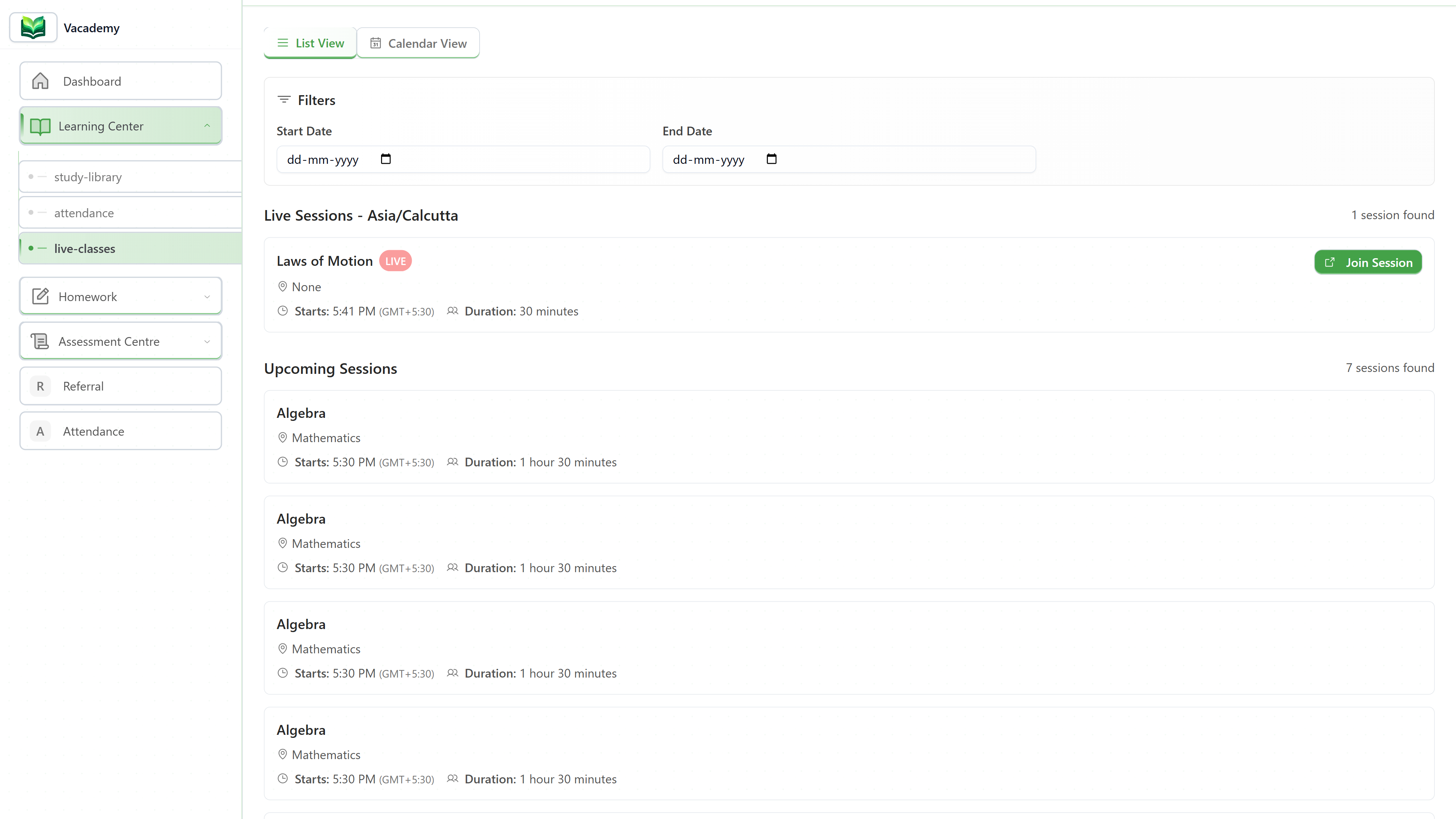
Notice what that removes. A class set to public and streamed to YouTube is a class and a piece of marketing at the same time, with attendance still recorded on the platform. Live classes also run through Zoom and Google Meet for the private ones.
Step Two: They Check You Somewhere You Do Not Control
Someone liked the video. The next thing they do is find out whether that person is real. A working professional considering a certificate course will check LinkedIn and its 1.3 billion members. A seventeen-year-old and their father are more likely to check Instagram and phone a cousin. Different places, same question.
Here is the uncomfortable part. A teacher page on your own website is a claim about your teachers. A profile on a website you do not control, with a history older than your institute, is much closer to proof. You cannot create that in a campaign. That is exactly why it counts.
The cheapest thing you can do: ask five teachers to keep an updated profile that names your institute and posts sometimes about the subject, not about admissions. The second cheapest: give certificates your old students can share. When a certificate carries a QR code that opens an independent verification page, a former student sharing it puts your name in front of a professional network you never paid to reach. That is what verifiable certificates are really for.
Step Three: They Look for an Institute That Is Alive
Future students are not looking for testimonials. They are looking for signs of life. A group where questions get asked and answered. A batch that is clearly running. Someone two years ahead of them who will say whether it was worth the money.
The signal is not group size. It is the date of the last message, and whether anyone from the institute replied. A 4,000-member WhatsApp group whose last post is a fee reminder from March looks worse than forty people talking this week.
This step converts better than paid ads for a simple reason. It comes from other students, so nobody suspects it was bought. The catch is that it only stays alive if it sits where the teaching already happens. Batch discussion feeds, doubt questions sent to a named teacher, and announcements pushed over WhatsApp and email create that activity on their own. Run a community as a separate marketing project and it dies by the second month.
Step Four: Your Website Confirms. It Does Not Convince.
By the time someone reaches your site, they have mostly decided. So the page is being asked to do a job it is usually not built for. Not convincing. Removing obstacles.
Fee visible without filling a form. Batch start date on the same screen. Admission and payment in one flow on a phone. Every extra field between a ready student and a paid seat costs you admissions at the exact moment they had already said yes.
A Vacademy course catalogue handles this part directly. Registration and payment run through connected gateways. Access can be automatic, or held for admin approval if the course is selective. Coupons, referral benefits and discount levels are set per course. Live analytics show visitors against admissions, so you can see which course page is losing people. The related steps are covered in our piece on turning enquiries into admissions.
How Vacademy Covers the Whole Journey
The usual setup is a video tool, a landing page builder, a payment link, a WhatsApp group and an LMS. None of them know about each other. The real cost is not the licence fees. It is that no single system can tell you which video brought which paid seat.
Infographic 2 — What the student does, and what you need on your side
| Step | What the student does | What Vacademy gives you |
|---|---|---|
| They discover you | Watches a video, then asks a follow-up question in search | Live classes stream to YouTube Live, Zoom or Meet. The class is the content. |
| They check you are real | Looks up the teacher by name | Certificates carry a QR code an outsider can verify |
| They ask other students | Finds someone who already did the course | Batch discussion feeds and doubt questions answered by named teachers |
| They confirm and pay | Checks the fee and the start date, then pays | Course catalogue with admission, payment, coupons and referrals in one flow |
| You learn what worked | Never tells you where they came from | Invite links report their own source and referral data |
A free mock test that brings enquiries
Tests can be opened to people outside your institute using guest links, with automatic reminders and question-by-question analytics. The test itself is the advertisement.
Invite links that report back
Every course comes with an automatic invite link that has payment and referrals built in. Different versions can be placed on landing pages or sent on WhatsApp, and each one reports where its admissions came from.
Emails that skip the wrong people
Email campaigns can target by role, admission status, engagement score, location and referral status. Exclusion filters mean students who already paid stop receiving admission offers.
More detail in admissions CRM, coupons and referrals and reports and analytics.
A Check You Can Run This Week
Seven questions. Answer each one honestly, with your own website and phone open. Four or more “no” answers means your money is going to the last step of a journey that is decided in the first three.
Short video
Have you posted a video in the last 14 days that teaches something, instead of advertising the institute?
Facts a machine can read
Are fee, duration, batch timings, eligibility and teacher names in plain text on the page, not inside an image or a PDF?
Teachers people can find
Can a parent find at least three of your teachers on a website you do not own?
Certificates
Can an old student prove they studied with you without asking your office for a letter?
A group that is alive
Was the last staff reply in your student group this week, or last quarter?
Steps to pay
How many fields and how many taps between the fee page and a paid seat?
Knowing what worked
For last month's admissions, can you say where each one came from?
The honest catch: the last question is the one almost nobody can answer, and it decides whether fixing the other six is worth it. Working out where an admission came from is genuinely hard in education, because the most convincing step of all, a friend's recommendation, leaves no record anywhere. Trackable invite links make the gap smaller. They do not close it.
Be Present Where Your Students Already Are
“Build a website and wait” was a real strategy for about fifteen years. It stopped working the moment search engines began answering the question instead of listing answers, and the phone became the place where every decision gets checked.
The work is now spread across four places, and only one of them is yours. Teach in public, where students find you. Be easy to look up by name, where they check you are real. Keep a batch visibly talking. Then make the last step take thirty seconds. Institutes that get the first three right find the fourth one almost takes care of itself.
Map Your Journey in 30 Minutes
Book a free growth consultation. Bring last month's admissions and we will work out which step is actually losing students.
Frequently Asked Questions
What does the modern admission journey look like?
Four checks, not four steps. Students discover you through short videos and AI search answers. They check you are real on LinkedIn and teacher profiles. They look for proof from students already in your batch. Your website comes last, where they confirm and pay. Most institutes still spend as if the website came first.
Is my institute's website still important?
Yes, but for a different job. It is no longer where students are convinced. It is where a decision gets confirmed. So showing the fee without a form, a clear batch start date, and admission plus payment in one flow matter much more than another page of persuasive writing.
How do students check an institute before enquiring?
They watch a short video. They ask a follow-up question in search or an AI chat. They look up the teacher by name. Then they find someone who already took the course. Each step checks the one before it. By the time an enquiry form is filled, most of the deciding is done.
Do short videos really matter for education marketing in India?
The numbers say yes. The IAMAI-Kantar Internet in India Report 2025 found 588 million people, 61% of active internet users, watching short video content, with rural users slightly ahead of urban ones. For most institutes this is now the widest channel available for being discovered.
How do I build student proof without a big marketing team?
Keep it inside the platform where you already teach, so it happens on its own. Batch discussion feeds, doubt questions answered by named teachers, and announcements sent on WhatsApp and email create visible activity without anyone being given the job of creating it.
How does Vacademy help outside my website?
Live classes can stream straight to YouTube Live, Zoom or Google Meet, so a class doubles as content that gets you found. Tests can be opened to outsiders as a free mock test. Invite links carry payment and referrals, and report where each admission came from. Student discussion and doubt answering sit in the same system as admissions and fees.