The course is a container inherited from printed syllabi and fixed classroom calendars. It has a start and an end because a term did. Learning does not. Skills decay and the need reappears three months later, by which time the relationship between the institute and the learner has ended. Institutes that keep selling endings keep rebuilding their revenue from zero every year.
A continuous learning platform is not an LMS with more content. It is a learning ecosystem — content, practice, community, assessment and coaching running continuously, with no terminal state. This is the term worth owning as an institute, because it changes the shape of what you sell and how you measure success.
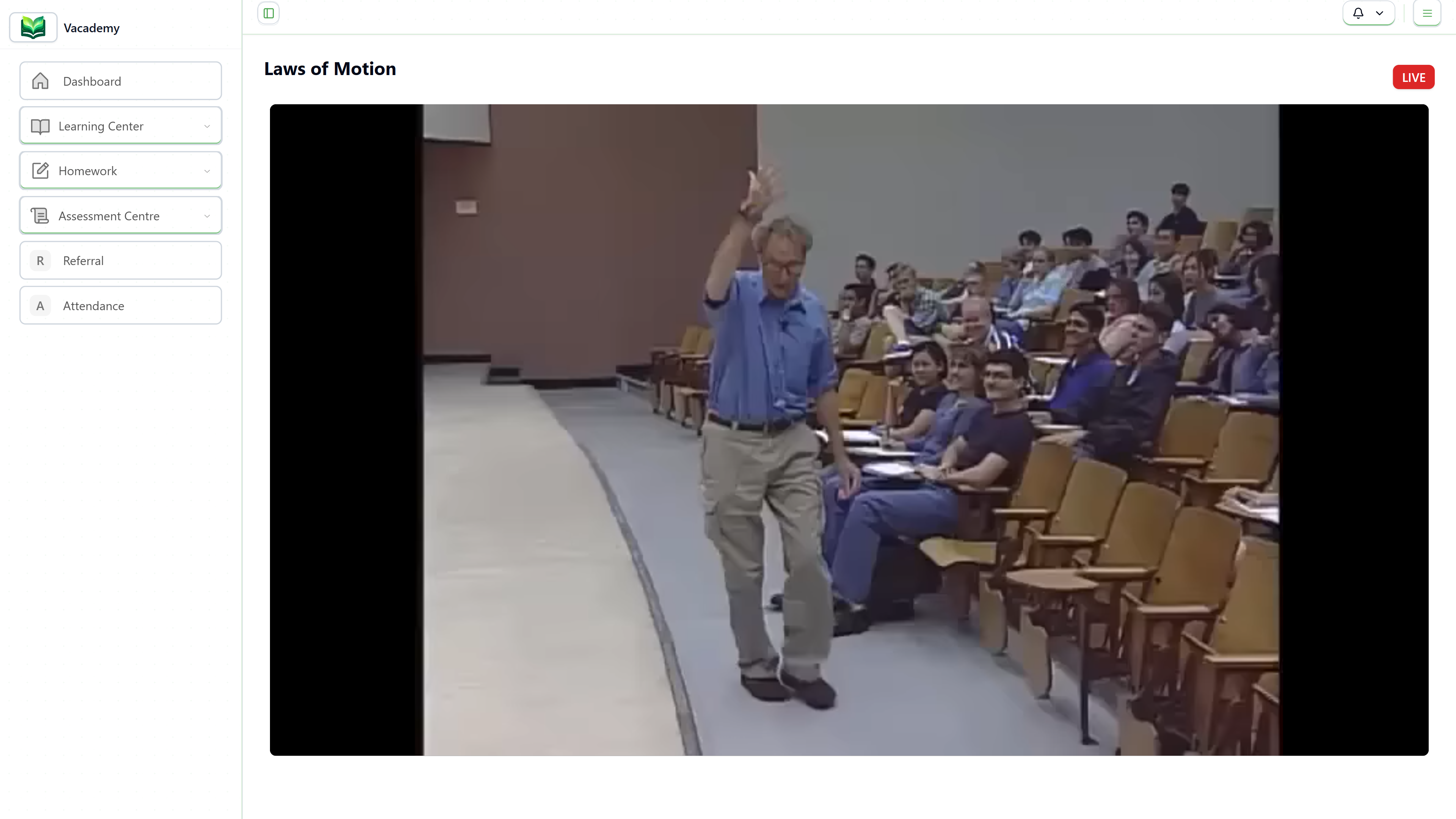
Learning Ecosystem vs LMS — What Actually Changes
A precise definition is worth more than a slogan. A continuous learning platform runs the whole loop — content, practice, community, assessment and coaching — with no terminal state, so learners can re-enter at any time and progress remains continuous.
| Criterion | Traditional LMS | Continuous Learning Ecosystem |
|---|---|---|
| Terminal state | Course complete | No terminal state |
| Learner relationship | Ends at certificate | Continues through role changes |
| Content shape | Linear syllabus | Modular, re-enterable |
| Practice | Bundled inside course | Continuous, spaced |
| Community | Comments beneath a lesson | Cohorts and peers as core infra |
| Credentials | One certificate | Stackable, progressive |
| Revenue model | One-time fee | Renewals + expansion |
The Four Layers of a Continuous Learning Ecosystem
Miss any one and the ecosystem is only a better LMS. Have all four and the whole model changes.
Content
Modular and re-enterable rather than linear. Every unit stands on its own so a returning learner does not have to restart the course.
Example: A GST module built to be revisited every quarter, not consumed once.
Practice
Spaced retrieval and application. The forgetting curve is real. Content without practice loops decays inside 30 days.
Example: Weekly problem sets that pull from earlier topics, not just the current one.
Community
Peers and cohorts as retention infrastructure. Community is not a feature. It is the reason people stay after content decays.
Example: A CFA cohort that keeps meeting between exam attempts.
Credentialing
Progressive and stackable. Micro-credentials that add up over years, not one PDF at the end of one course.
Example: A skills badge earned per module that compounds into a full pathway.
What This Means for Revenue
A learner who pays a one-time fee generates that fee once. A learner inside an ecosystem pays for the pathway, renews and expands. Take a single student across three years.
Course model: ₹15,000 once. Then silence.
Ecosystem model: ₹5,000 entry + ₹2,000 monthly on a pathway subscription + one premium cohort a year — roughly ₹50,000 over three years, with lower CAC per rupee earned.
Designing Journeys Instead of Catalogues
A catalogue lists what you sell. A journey sequences what a learner becomes. Rebuilding one to the other is mostly editorial work, not engineering.
Before — catalogue
- • Course A — 40 hours, ₹12k
- • Course B — 30 hours, ₹9k
- • Course C — 20 hours, ₹6k
- • Advanced course — ₹18k
Buyer sees a menu. Chooses one. Leaves.
After — journey
- 1. Foundation pathway — 6 weeks
- 2. Applied practice cohort — 8 weeks
- 3. Specialisation track — pick one of three
- 4. Continuous membership — evergreen
Buyer sees a route. Enrols. Comes back for the next stage.
Metrics That Matter When Learning Never Ends
Retire completion rate as the headline. Replace it with metrics that actually predict lifetime value.
| Old headline metric | What it actually measures | Continuous replacement |
|---|---|---|
| Completion rate | The headline metric | Return rate — how often learners come back after their first spike |
| Enrolments | A count of one-time transactions | Active weeks per learner per year |
| Course NPS at end | A snapshot at the goodbye | Time-to-first-application — days from lesson to real use |
| Certificate issued | The final artefact | Renewal rate and progression depth |
Vacademy is designed for continuous, not terminal. Journeys, cohorts, memberships, stackable credentials — one platform.
Stop Selling Endings
Map your current catalogue to a continuous journey with a Vacademy strategist. See how one restructured pathway changes three-year LTV.
Frequently Asked Questions
What is a continuous learning ecosystem?
A learning system with no terminal state. Content, practice, community, assessment and coaching run continuously, so a learner can re-enter at any time and progress remains cumulative rather than restarting per course.
Learning ecosystem vs learning management system — what is the difference?
An LMS delivers and tracks content. An ecosystem also runs practice, community, credentialing and continuous progress. LMS is the delivery layer inside a larger ecosystem.
How do I move from courses to learning journeys?
Start from the learner's destination, work backwards to capabilities, sequence by capability instead of chapter, and build re-entry points for returning learners. Do it for one flagship pathway first.
How do I increase learner retention after course completion?
Retire the completion event as the endpoint. Add continuous practice loops, keep the community open past the last lesson, and offer stackable next steps immediately, not six months later.
Is a continuous learning platform right for exam-prep institutes?
Yes, especially for institutes moving beyond a single exam cycle. Alumni prep cohorts, revision memberships and skill-adjacent tracks turn one attempt into a long-term relationship.
What is the best LMS for continuous professional development?
One that treats content as modular, credentials as stackable, and community as core infrastructure — not one built for one-time course consumption.