Executive Summary
Vendor branding on a learner-facing surface is usually treated as a cosmetic issue and traded away for a discount. It is not cosmetic. It anchors your price against the platform's public rates, tells competitors precisely how to replicate your operation, gives a third party a marketing channel to the audience you paid to acquire, and moves search equity for your own programme names onto someone else's domain. This is a full audit of the nine places vendor branding leaks, what each one costs, and what to negotiate.

1. The Four Real Costs
The badge itself is not the problem. What the badge enables is.
A prospect deciding on a significant fee will search your institute's name. If the platform is visible, they find its public pricing page within a click or two. A programme fee that looked like an investment in your faculty and curriculum now reads, to that prospect, as a markup on software they can see the price of. You are not selling software — but you now have to argue that, from a defensive position, at exactly the moment you should be closing.
A competitor who learns which platform you run on has skipped the entire evaluation phase. They know what your operation can and cannot do, what your automation looks like, and roughly what it costs. If your delivery is a differentiator, a visible vendor name converts it into a purchasable commodity. Vendor sales teams also use it: a visible logo is a lead list of institutes already sold on the category.
You spent real money acquiring each learner. A visible vendor gets that audience for free — through footer links, transactional email branding and app store listings that surface competitors in the same category. Where the vendor also operates a consumer marketplace, this is sharper still: your learner discovers a storefront full of alternative courses, some of them from your direct competitors, reached through a surface you paid to put in front of them.
If your portal is at yourname.vendor.com, every link to your course pages builds the vendor's domain, not yours. Alumni sharing your programme, press covering your institute, students bookmarking a page — all of it strengthens an asset you do not own and cannot take with you. Years of accumulated authority stay behind on the day you switch.
These costs scale with your fee and with the seniority of your audience. A low-cost consumer course is largely unaffected. A professional programme selling to doctors, senior engineers or corporate buyers is affected severely, because those buyers research thoroughly before committing, and institutional seriousness is part of what they are paying for. The higher your price point, the more a visible vendor badge argues against it.
2. The Nine Places Vendor Branding Leaks
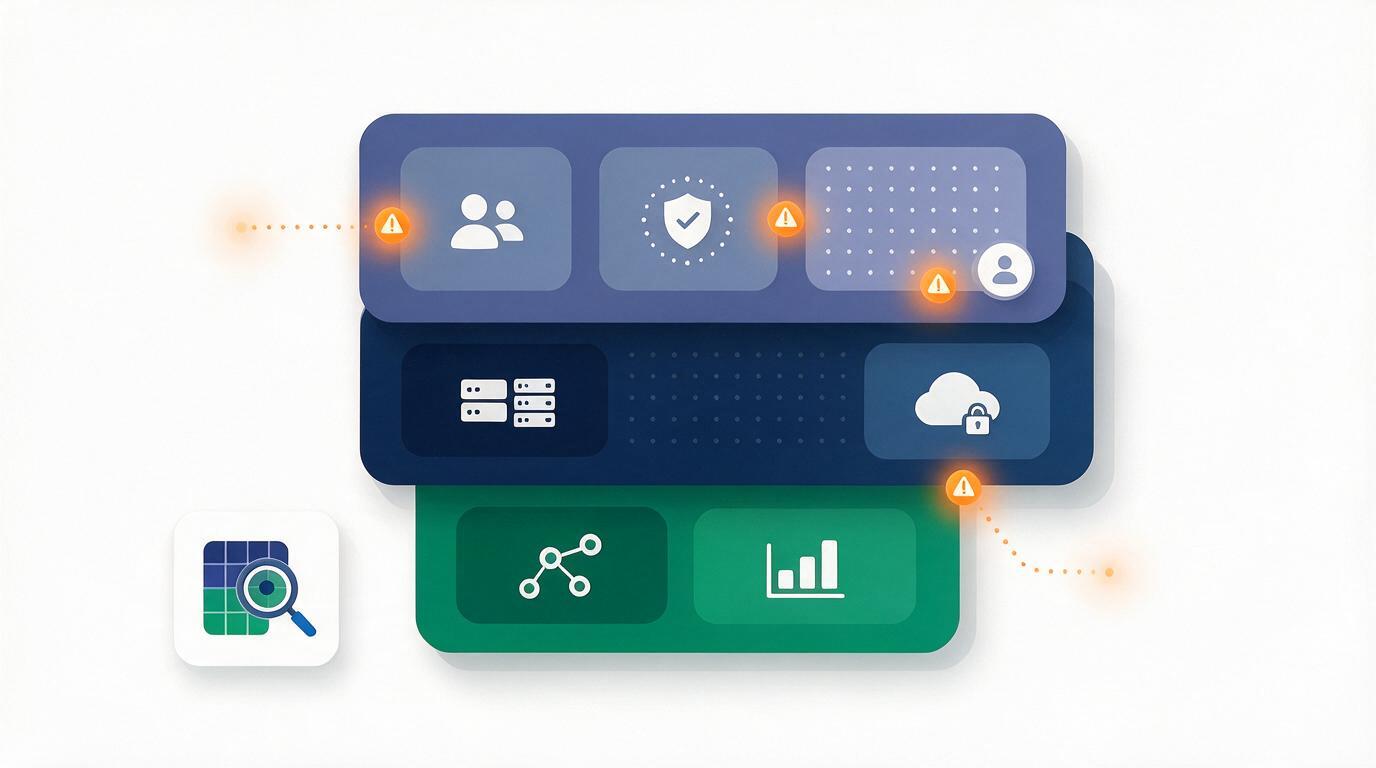
Institutes usually check the first two and assume the rest. Most leaks are in the rest. Work through these against any platform you are evaluating, and against the one you already run:
| Surface | What to check |
|---|---|
| 1. Web domain | Your own domain, or a subdomain of theirs? Check the certificate too. |
| 2. Mobile apps | Published under whose developer account? Whose name appears as the seller on the listing? |
| 3. Transactional email | Sender address, reply-to, and the footer of receipts, reminders and password resets. |
| 4. WhatsApp and SMS | Whose sender ID and business account? Message templates often carry vendor text. |
| 5. Login and error pages | The most commonly missed. A branded portal with a vendor login screen undoes the rest. |
| 6. Invoices, receipts and certificates | Documents learners keep and forward for years. Check the PDF metadata as well as the visible design. |
| 7. Payment checkout | What name appears on the learner's bank or card statement? |
| 8. Terms, privacy policy and support | Whose entity is named, and where does a support request actually land? |
| 9. Live class and video player | Meeting room branding, join screens, player watermarks and downloaded file names. |
Enrol yourself as a learner on your own platform using a personal email and phone number, and pay a small real amount. Then go through every message, document and screen the enrolment produces — the welcome mail, the receipt, the payment statement line, the class join screen, a downloaded video, the certificate. Search the vendor's name in each. This surfaces more in a quarter of an hour than any feature checklist, because it is exactly the path your learners take.
3. What to Negotiate — and What to Refuse
Vendors frequently offer a discount in exchange for keeping their branding visible. Whether that is a good trade depends on numbers you can actually estimate, so estimate them rather than deciding on instinct:
- Compare the discount to one lost enrolment. If removing the badge costs less annually than a single programme fee, and the badge plausibly costs you one enrolment a year through price anchoring, the discount is not a discount.
- Get white-labelling in the contract, not the sales call. Specify the surfaces. “Fully white-labelled” without an enumerated list is unenforceable — the nine rows above make a reasonable schedule.
- Insist on owning the developer account and the domain. These are the two assets that determine whether you can leave with your brand and your ratings intact. Everything else is recoverable; these are not.
- Ask what happens on renewal. Some agreements allow branding to be reintroduced, or price it as an add-on that can be repriced later. Fix the terms for the full term.
- Refuse a shared subdomain outright, whatever the discount. It is the one item on this list that quietly transfers a compounding asset — your accumulated search authority — to the vendor permanently.
None of this means a visible vendor is always wrong. If you are testing a market, running low-cost courses, or genuinely do not compete on brand, the discount may be the better deal, and taking it deliberately is a sound decision. The failure mode is not choosing visibility — it is discovering it after launch, on a receipt a learner forwarded to a competitor.
4. Where Vacademy Stands
Our default is that no learner-facing surface carries our name: your domain, your colour themes, native iOS and Android apps published under your brand, Windows and Mac applications, and separate branded portals for administrators, counsellors, trainers and learners. We do not operate a consumer marketplace, so there is no storefront for your learners to be routed into.
The direct consequence is that we get no backlinks, no logo wall and no ranking on our customers' brand names — a trade we have written about separately, because it is a real cost and we would rather explain it than have you notice a thin link profile and wonder. The rule is simply that visibility is the institute's decision to make, and the default is invisible.
Run the nine-point audit on your current platform
Bring what you find. We will show you the same nine surfaces on a live deployment so you can compare them directly rather than take a claim on trust.