The way people package, sell and deliver expertise has fundamentally shifted. The old split between an LMS for hosting courses, a CRM for tracking prospects, a payment gateway for collecting money and a marketing tool for reaching learners is no longer workable at any scale. Modern knowledge economy platforms have collapsed those layers into one operating system for the business.
This is why platforms like Vacademy are no longer described as "just another LMS." In reality they are business infrastructure for the knowledge economy. Everything a coach, creator or institute needs to run and grow their teaching business runs inside the same system, under their own brand.
This piece walks through the shift, the old-LMS problem, what a real infrastructure approach looks like, and who benefits most.
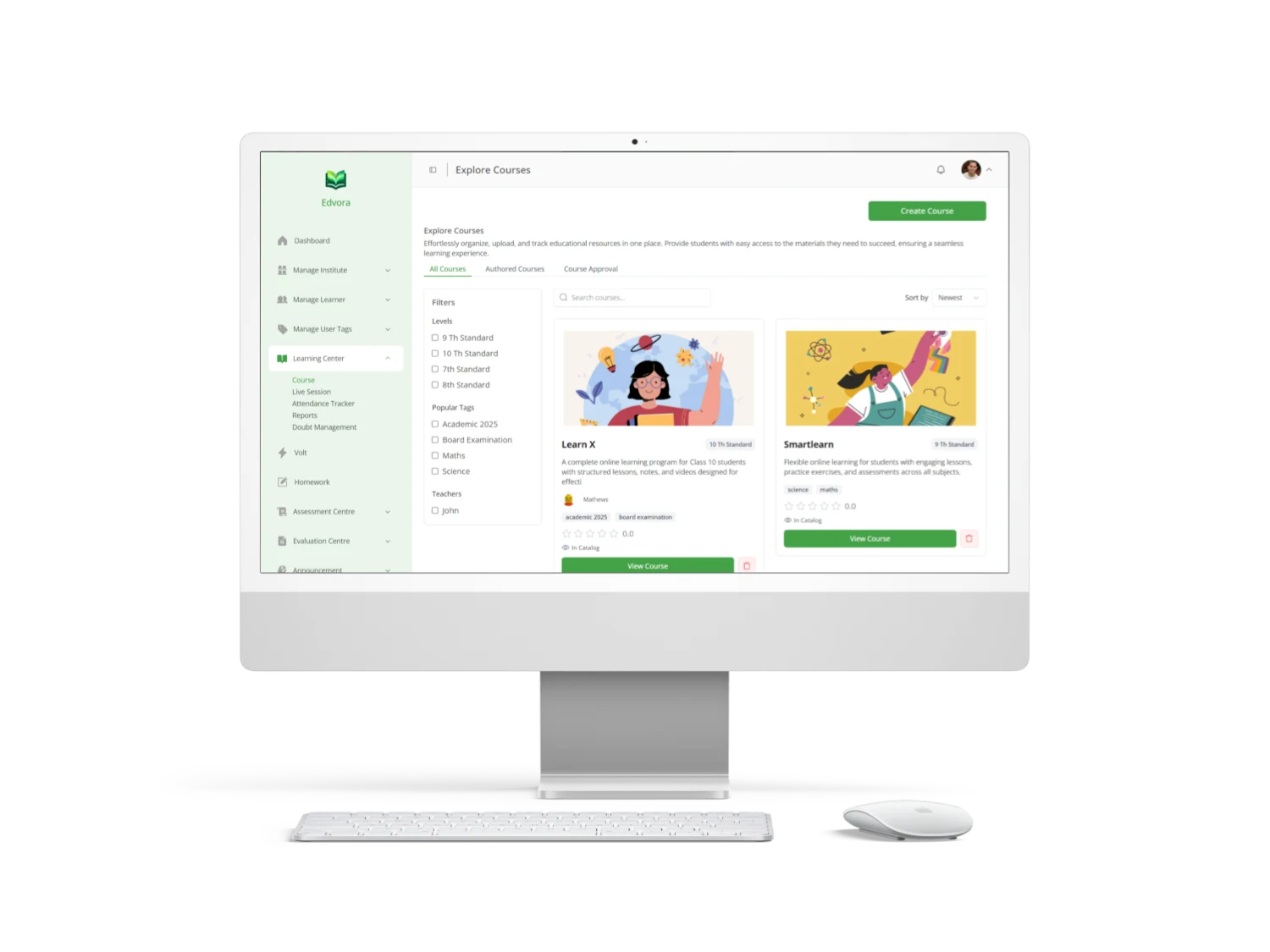
The Shift: From Course Hosting to Business Infrastructure
The knowledge economy is no longer about "course hosting." It is about running a business whose product happens to be structured learning. Creators sell coaching programmes. Institutes sell certifications and memberships. Companies sell internal upskilling and customer education. Each of these is a business that needs infrastructure, not just a content shelf.
Traditional LMSs were built for a simpler era, when uploading a video was the innovative move. Today, uploading is table stakes. What matters is what the platform does around the video, sales, retention, community, analytics, brand. That is what knowledge economy platforms bring to the table.
The Problem: Old LMS Model Versus Business Infrastructure
A quick comparison between the old online course platform and a modern knowledge economy platform.
| Dimension | Old LMS Model | Vacademy as Business Infrastructure |
|---|---|---|
| Primary job | Host course content | Run the entire knowledge business |
| Selling | External marketplace or landing page | Built-in catalogue, payments, subscriptions |
| Customer management | Separate CRM tool | Native CRM tied to learner records |
| Marketing | External email tool | Automated email and WhatsApp sequences |
| Analytics | Course completion only | Revenue, retention, engagement and outcomes |
| Growth model | Sell more courses | Memberships, cohorts, corporate, community |
The Infrastructure Approach
A knowledge business does not need best-of-breed for every function. It needs one connected backbone that runs end to end. Vacademy consolidates LMS, CRM, payments, marketing, community and analytics into a single operating layer, so growth stops adding tools and starts adding revenue.
Six Pillars of a Knowledge Economy Platform
This is what business infrastructure for online learning actually contains.
Branded Delivery
Custom portal and mobile app, so the knowledge business lives under your brand, not somebody else's marketplace.
Built-In CRM
Lead capture, segmentation and pipelines that treat learners as customers, not just enrolments.
Payments and Monetization
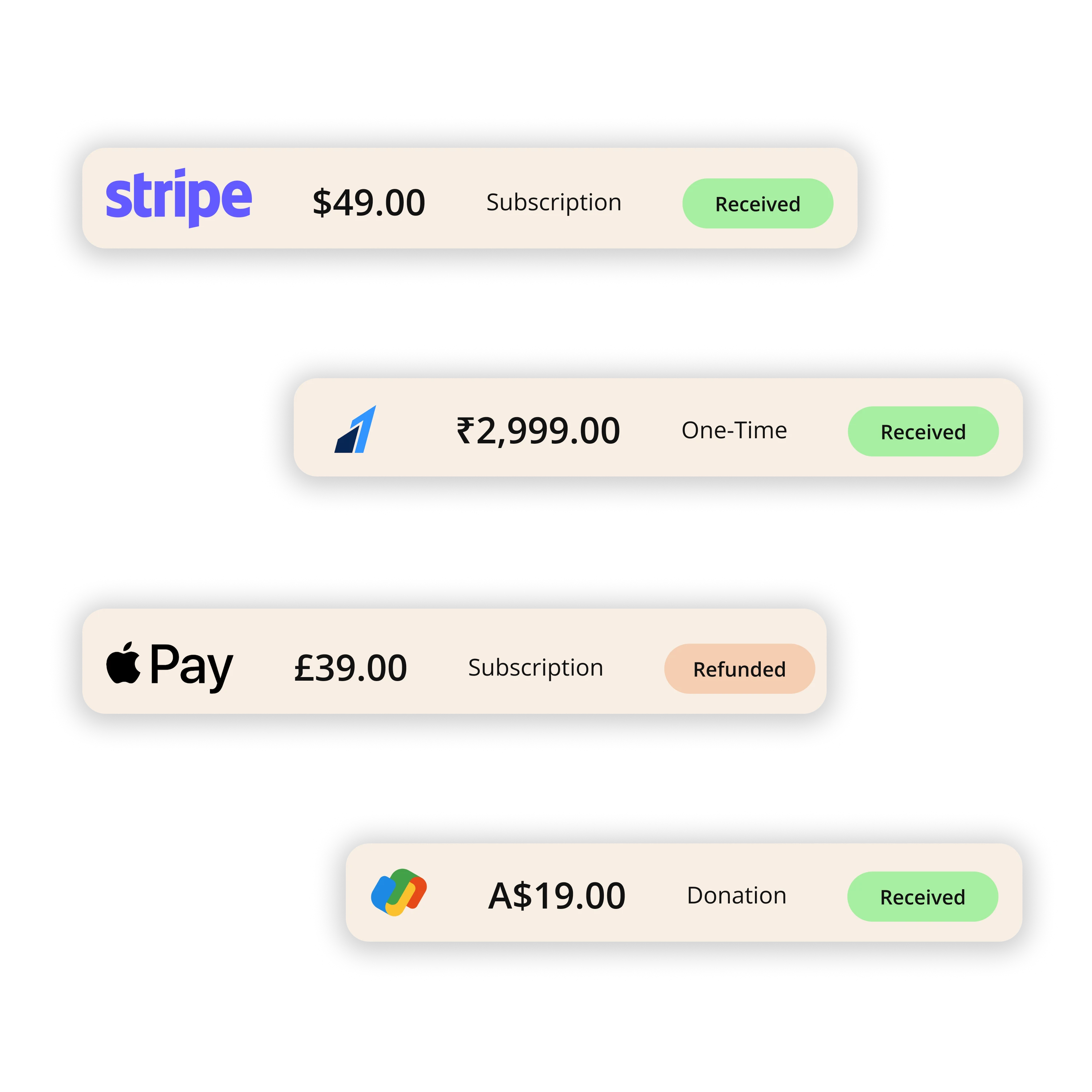
One-time, subscription, bulk and multi-currency, all native, no external checkout.
AI Content Production
Vsmart AI drafts lessons, quizzes and feedback so knowledge production stops being the bottleneck.
Real-Time Business Analytics
Revenue, retention, outcomes and engagement in one dashboard, not in three exports.
Community and Live Layers
Recurring live sessions, cohorts, memberships that build long-term relationships.
Knowledge Monetization Needs Production Speed
Creators cannot grow revenue if content production takes weeks. Vsmart AI compresses the drafting cycle so the business can ship new courses, cohorts and updates at the pace the market moves.
Who Benefits Most
Everyone monetizing expertise, at any scale.
Independent Coaches
Yoga, wellness, career, finance. Coaches monetizing expertise as courses, memberships and live cohorts.
Coaching and Training Institutes
Exam prep, professional training, corporate certification. Institutes that need CRM plus LMS plus payments in one platform.
Educators and Creators
Solo educators building creator economy tools around their teaching, without stitching together six SaaS tools.
Corporate L and D Teams
Companies running internal, partner and customer academies as growth channels.
Why This Matters Now
The creator economy tools of the last decade solved sub-problems. Course hosts hosted courses. Email tools sent emails. CRMs tracked leads. None of them treated the knowledge business as a whole. That gap is what platforms like Vacademy exist to fill.
A scalable learning management system in 2026 is really business infrastructure with learning at the centre. If you are still running a knowledge business on five disconnected apps, the platform is fighting you. If you are on infrastructure, the platform is doing the compounding for you.
Move Your Knowledge Business Onto Real Infrastructure
Walk through your current stack with the Vacademy team. We will show you which parts of your business are running on infrastructure and which are still stitched together.
Frequently Asked Questions
What is the difference between a knowledge economy platform and a traditional LMS?
A traditional LMS focuses only on course delivery. A knowledge economy platform like Vacademy adds CRM, marketing and sales tools, turning your platform into business infrastructure, not just a classroom.
Can I use a knowledge economy platform for my coaching business?
Yes, exactly. Platforms built for knowledge monetization handle coaching-specific needs, client management, payment processing, automated follow-ups and content delivery, in one place.
Why is business infrastructure important for online educators?
Because juggling separate tools (LMS plus CRM plus email plus billing) wastes time and kills margins. Business infrastructure consolidates everything, letting you focus on teaching and growing.
What features should a scalable learning management system have?
Look for all-in-one CRM plus LMS, payment processing, marketing automation, student analytics and integrations. These let you grow without switching platforms every six months.
How do creators monetize knowledge using platforms like Vacademy?
Through courses, coaching programmes, memberships and live sessions, all managed from one dashboard. No more separate tools for selling, teaching and customer management.
Is Vacademy better than other LMS platforms?
Vacademy is not just an LMS, it is business infrastructure. Where competitors focus on course hosting, Vacademy combines LMS plus CRM plus sales tools, making it ideal for institutes and creators scaling knowledge businesses.