Executive Summary
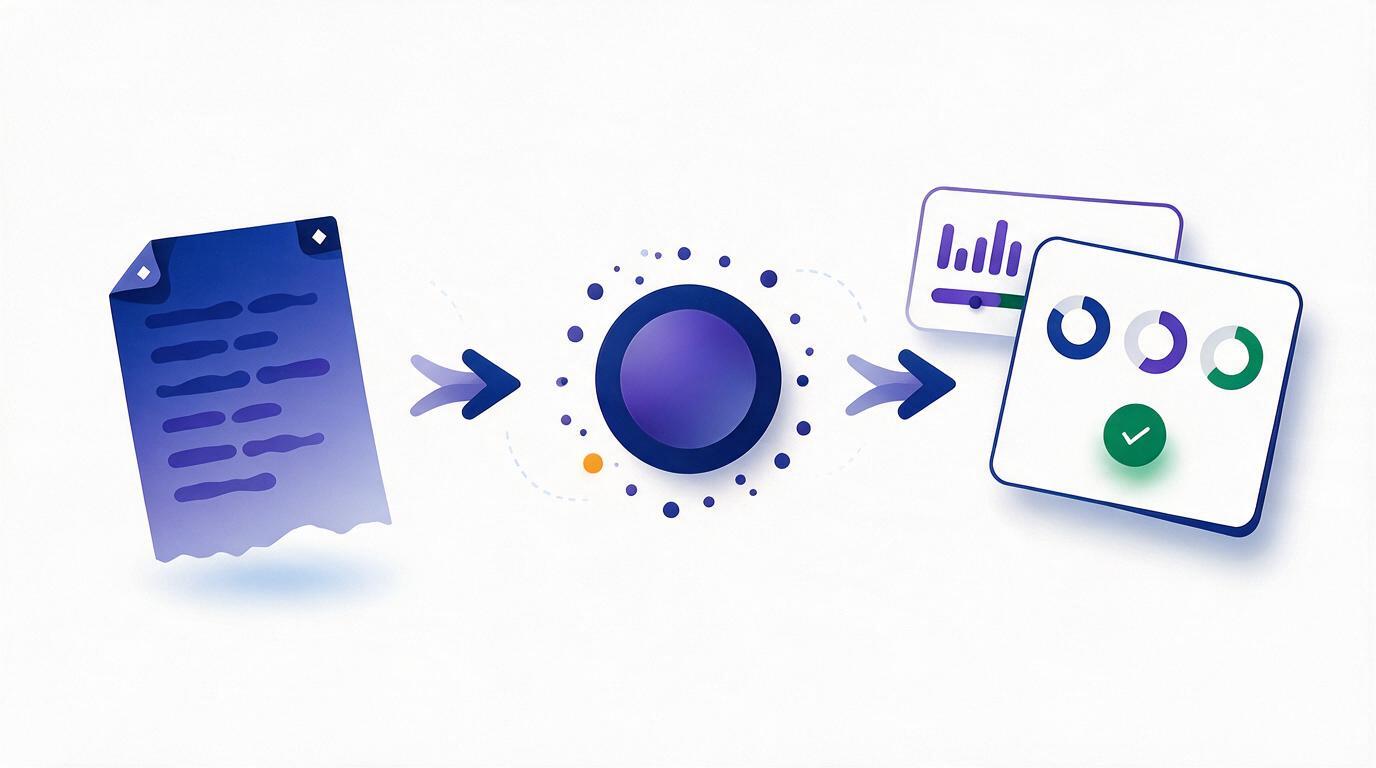
Descriptive evaluation is the largest unautomated cost in most institutes, and the reason assignment-heavy programmes quietly become MCQ-only programmes as they scale. AI can now do a competent first pass on handwritten scans, uploaded PDFs and typed long-form answers. The question that determines whether it works in practice is not model quality — it is workflow design: which submissions clear automatically, which route to a human, what the faculty reviewer actually sees, and who is accountable when a mark is wrong.
1. Why Descriptive Assessment Silently Disappears at Scale
A batch of 150 learners submitting one long-form assignment represents roughly 25 to 40 hours of faculty evaluation. Multiply across modules and concurrent batches and the arithmetic breaks. Institutes then do one of three things, all of which cost something real:
- Convert everything to MCQs. Cheap to grade, but it stops measuring reasoning, clinical judgement, and the ability to construct an argument — usually the exact skills the programme claims to teach.
- Return results weeks late. Feedback delivered a month after submission has almost no learning effect; the learner has moved on and will not revisit the reasoning.
- Grade inconsistently. Different faculty, different standards, and the same answer scores differently depending on who opened it and when. This surfaces later as disputes, which are expensive in trust as well as time.
The purpose of automated evaluation is not to remove faculty judgement. It is to remove the mechanical portion — reading legibility, locating which criterion an answer addresses, applying an arithmetic total — so faculty time concentrates on the answers where judgement genuinely changes the outcome.
2. What Realistically Works Today, by Submission Type
| Submission type | Automation confidence | Where it struggles |
|---|---|---|
| Typed long-form text | High | Answers that are correct but argued in an unexpected structure |
| Clean PDF uploads | High | Embedded diagrams and tables that carry part of the answer |
| Neat handwritten scans | Moderate to high | Poor lighting, skewed phone photos, faint pencil, crowded margins |
| Dense or untidy handwriting | Moderate | Transcription errors that silently become content errors in scoring |
| Diagrams, labelled anatomy, schematics | Low | Spatial correctness and labelling accuracy — route these to faculty by default |
| Numerical working and derivations | Moderate | Awarding partial credit for a correct method with one arithmetic slip |
The dangerous error is not a wrong score — it is a confidently wrong score on a misread transcription. When handwriting recognition drops a negation or misreads a drug name, the evaluation that follows is internally consistent and completely wrong, and it does not look uncertain. This is precisely why the reviewer interface must show the original scan alongside the extracted text, never the score alone.
3. The Rubric Is the Real Product
Most disappointing results come from a vague instruction — “grade this out of 10” — rather than from model capability. A usable rubric is explicit about criteria, weights and what distinguishes adjacent bands. Written properly, it makes evaluation consistent for human markers too, which is a benefit worth having independently of any automation.
- Decompose into criteria with weights rather than a single holistic score, so the learner sees where marks were lost and a reviewer can correct one component without re-grading everything.
- Define band descriptors — what a full-credit answer contains versus a partial one. Ambiguity here produces clustering around the middle of the scale.
- State what must not be penalised. Spelling in a clinical reasoning answer, or a valid alternative protocol your faculty accept. Without this, automated marking quietly enforces one orthodoxy.
- Require an evidence quote per criterion — the specific span of the learner's answer that justified the score. This single requirement makes reviewing fast and disputes resolvable.
- Calibrate on real papers before rollout. Take 20 to 30 already-graded scripts, run them, and compare against the marks faculty gave. Tune the rubric until agreement is acceptable, then keep those scripts as a regression set.
4. Designing the Human-in-the-Loop Step
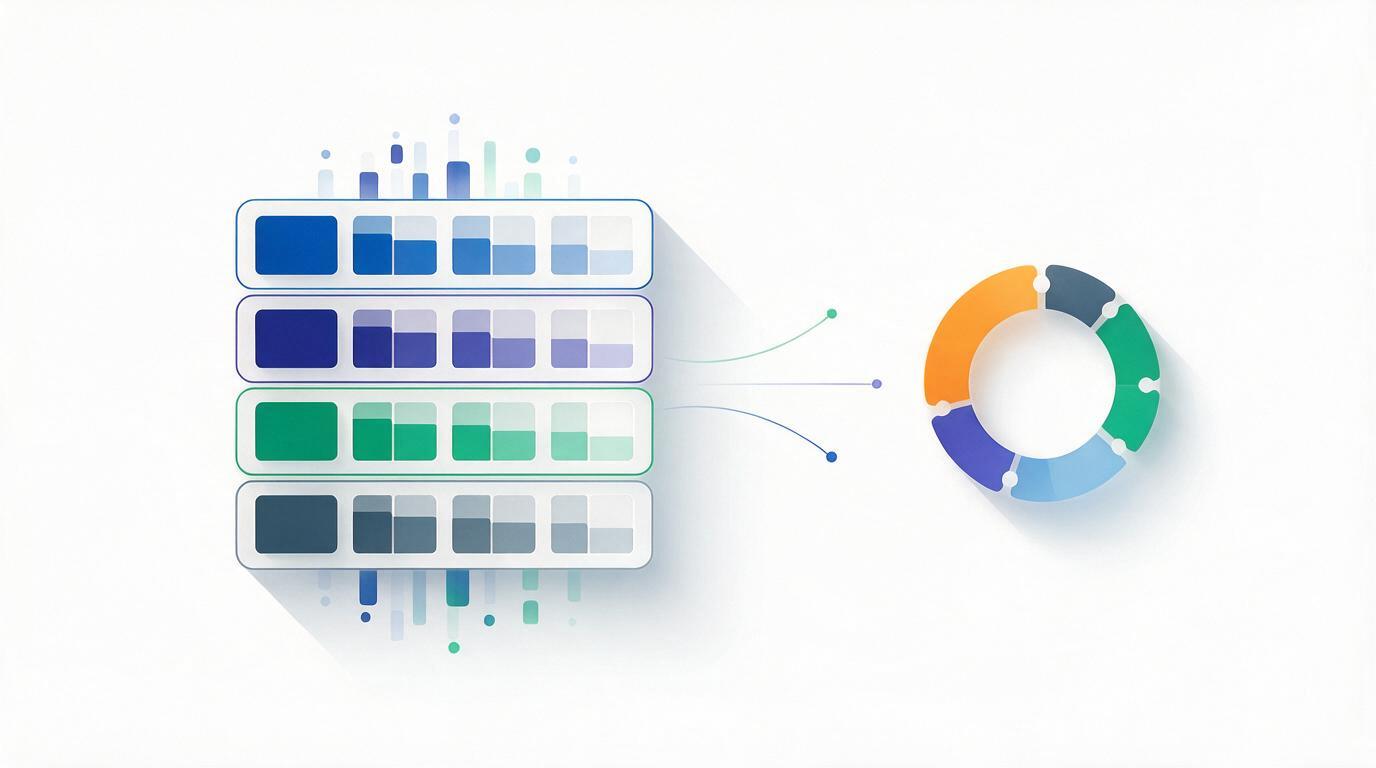
Sending every script to faculty for approval recreates the original workload. Sending none removes accountability. The workable middle is confidence-based routing with a small mandatory audit sample:
High extraction confidence, clear rubric match, score away from any grade boundary. These publish without review — but stay auditable, and a random sample is still surfaced to faculty.
Low transcription confidence, diagram-bearing answers, scores sitting on a pass or distinction boundary, unusually short or unusually long submissions, and anything the learner has already queried.
Anything with a certification, licensure or fee consequence attached, plus every appeal. If a mark determines whether someone receives a credential, a person signs it.
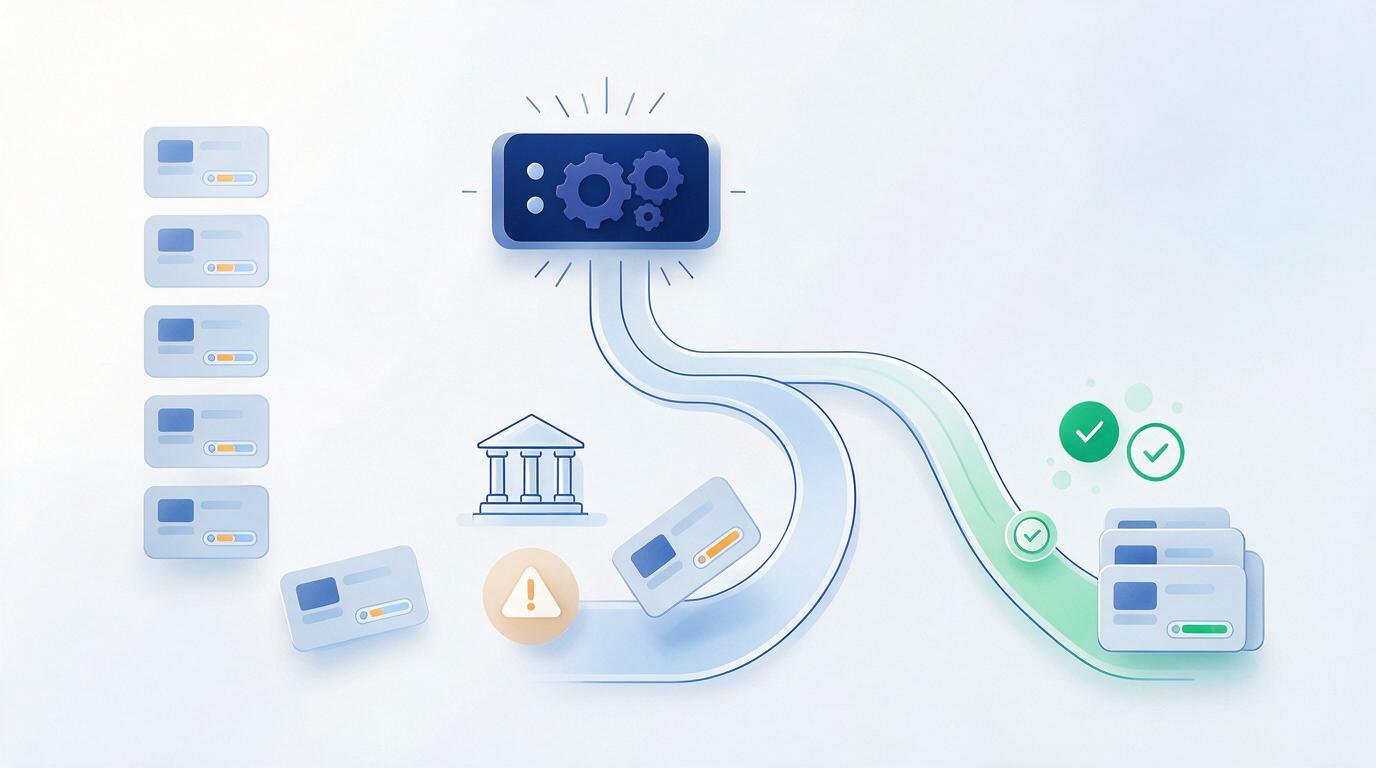
The reviewer screen determines whether this saves time or merely relocates it. A good one shows the original scan and the extracted text side by side, the criterion breakdown with the evidence span highlighted, one-click accept, and inline score adjustment with a required note when a mark is changed. A reviewer should be able to clear a straightforward script in well under a minute; if it takes longer, the interface is the bottleneck, not the model.
Those override notes are the most valuable data the system produces. A criterion that faculty consistently correct in the same direction is a rubric defect, and fixing it improves every future batch. Review the override log monthly — it is the closest thing to a quality metric this workflow has.
5. Result Release, Transparency and Fairness
- Choose release mode per assessment, not globally. A formative practice quiz can publish instantly; a certification assessment should hold until faculty approve the batch.
- Tell learners how their work was evaluated. Disclosing that AI produced a first pass reviewed by faculty is both fairer and, increasingly, expected. Concealing it converts a routine complaint into a credibility problem.
- Publish a real appeal route that lands with a human, with a stated turnaround. An appeal path that exists on paper but returns the same automated score is not an appeal path.
- Keep the full audit trail — original submission, extracted text, criterion scores, reviewer identity, and any override with its reason. This is what lets you answer a challenge months later.
- Watch for systematic disadvantage. Learners writing in a second language, or with untidy handwriting, can be systematically penalised by a transcription step rather than by their understanding. Sample and check.
The first batch will not save much time, because faculty will review nearly everything while calibrating trust — and they should. The saving arrives in batches three and onward, once the rubric is tuned and the auto-clear threshold has been validated against real override rates. Institutes that judge the investment on batch one usually abandon it one batch before it starts paying.
6. What This Looks Like in Vacademy
Vacademy supports multiple-choice assessments, descriptive assignments, PDF uploads, image uploads and handwritten answer uploads, with manual faculty evaluation and AI-assisted evaluation available on the same assessment. Faculty review before releasing results is configurable per assessment, alongside automatic or manual result release, and certificate automation can be tied to performance thresholds once results are approved.
Because assessment sits alongside the knowledge base, evaluation can be anchored to your institution's own approved material and teaching protocols rather than to generic external sources — which matters wherever more than one clinically or technically valid approach exists and you need marking to follow the one your faculty actually teach.
Test it on papers you have already graded
The only meaningful trial is a calibration run: bring 20 to 30 scripts your faculty have already marked and compare, criterion by criterion.
Handwritten, PDF, image and typed submissions supported on the same assessment.