The first wave of online teaching in 2020 was a survival exercise. Anyone who had a Zoom account and a Google Drive could call themselves an online educator. The bar was low because the alternative was no class at all. That moment defined the stack most academies still run on, video conferencing, a basic LMS, a payment link, a WhatsApp group and a stack of spreadsheets.
Six years later, that stack is buckling. Learners have grown up on Netflix, YouTube Shorts and personalised feeds. Parents expect updates the way they get them from a school app. Corporate buyers want learner analytics by Tuesday morning. The traditional online teaching platform was never designed for these expectations, which is why so many academies feel like they are running fast just to stand still.
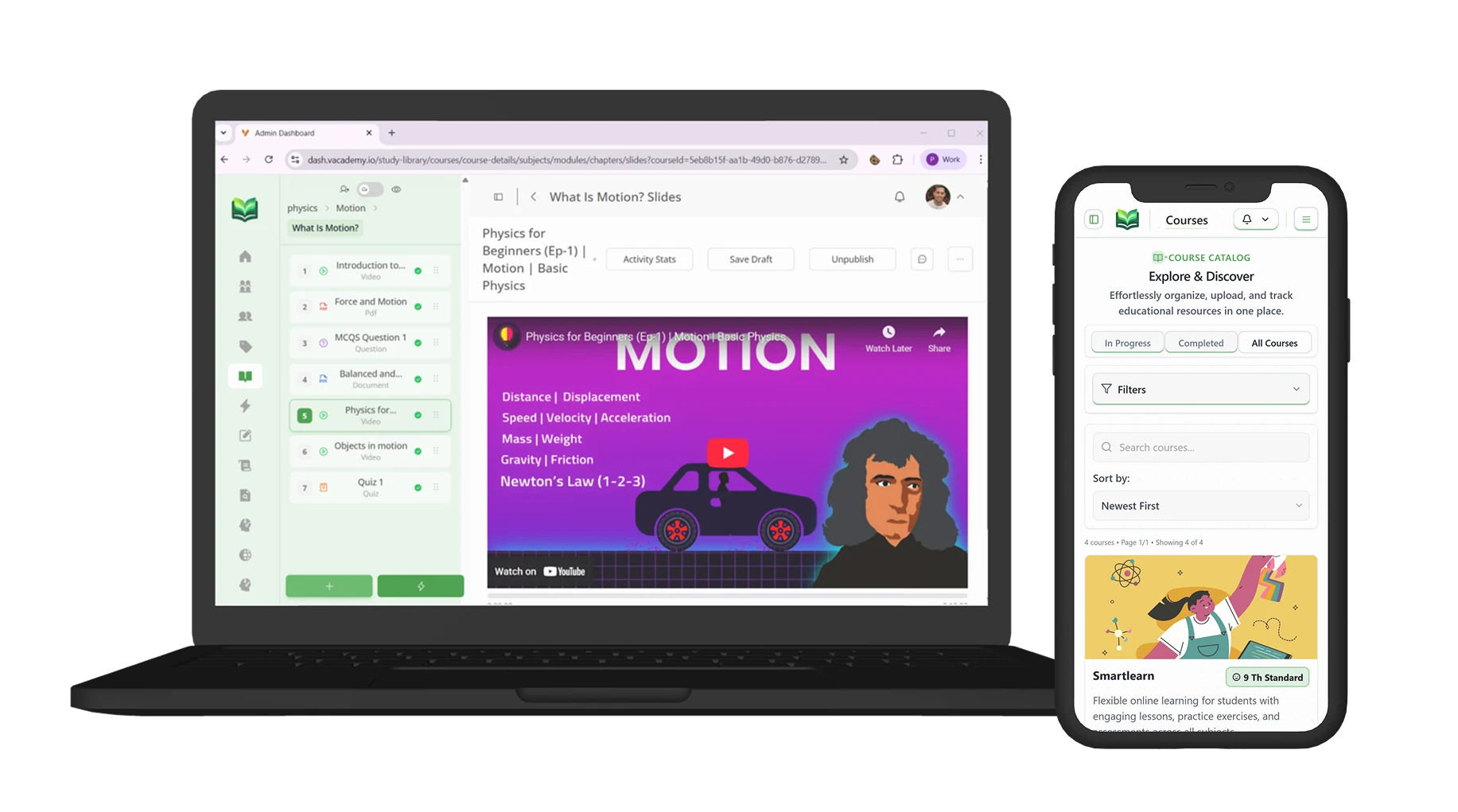
What 2026 Learners Actually Expect
The bar has moved. These are the expectations a modern online academy is judged against, whether it likes it or not.
| 2026 Expectation | Traditional Platform | Vacademy |
|---|---|---|
| Personalised learning paths and feedback | Same playlist for every learner | AI tailored content, quizzes and feedback per learner |
| A branded mobile app, not a generic one | A shared, generic app with someone else's name | White-labelled learner app on App Store and Play Store |
| Instant doubt resolution | Posts in a WhatsApp group, sometimes answered | Structured doubt module routed to the right expert |
| Real time progress visibility | Monthly PDF reports compiled by hand | Live dashboards plus scheduled email and WhatsApp reports |
| Frictionless payments and renewals | Manual invoices, payment links over chat | Built-in payments, subscriptions, renewals and bulk billing |
| Global delivery across time zones | Manual calendar juggling and confused learners | Time zone aware scheduling for every session |
Seven Ways Traditional Platforms Are Failing in 2026
Each one shows up as a daily friction. Together they explain why so many academies feel stuck.
Built Around Content Delivery, Not Learning Operations
The Failure
Traditional platforms assume the hard part is uploading a video. The actual hard part is enrolment, payments, attendance, doubts, reports and parent communication around that video.
How Vacademy Solves It
Vacademy is built as an operating system for learning, not a video host. Course delivery, CRM, payments, automation and analytics live in one ecosystem.
No Native AI, Bolt-On Plugins Instead
The Failure
Most legacy platforms approach AI as an afterthought, a third party plugin, an experimental tab. The result is shallow features that educators do not trust to put in front of learners.
How Vacademy Solves It
Vacademy ships the Vsmart AI suite as a first class part of the platform, designed for course creation, assessments, lecture planning and structured feedback.
Mobile Experience That Feels Borrowed
The Failure
Learners in 2026 live on their phones. Most legacy platforms still feel like a desktop site squeezed into a small screen, with a separate generic app that does not match the brand.
How Vacademy Solves It
Vacademy gives every academy a white-labelled, mobile first learner app, with classes, lessons, doubts, payments and progress in one place.
Engagement Is Invisible Until It Is Too Late
The Failure
Older platforms only surface drop-off after a learner has already left. There is no early warning system, so retention work happens after the damage.
How Vacademy Solves It
Vacademy tracks engagement, attendance and assessment patterns in real time. Educators see at-risk learners early enough to act.
No Real Automation, Just Reminders
The Failure
Most legacy LMSs offer basic email reminders and call it automation. They cannot run end to end workflows that actually move the needle on revenue or retention.
How Vacademy Solves It
Vacademy automates the full lifecycle, lead capture, enrolment, attendance, payments, follow-ups, certificates and renewal nudges, all triggered by learner behaviour.
One Size Fits All, So It Fits No One
The Failure
The same legacy LMS is sold to a coaching institute, a wellness coach, a coding school and a corporate L&D team. The result is a generic experience that none of them love.
How Vacademy Solves It
Vacademy is modular. The same platform configures itself for live yoga sessions, robotics workshops, exam prep batches or corporate certifications without forcing one workflow on everyone.
Learner Support Is Stuck in WhatsApp Limbo
The Failure
Doubts get asked in WhatsApp groups, scroll past, get lost. Learners never know if a question will get a real answer, and educators feel constantly on call.
How Vacademy Solves It
Vacademy gives doubts a structured home, routed to the right educator, tracked, resolved and turned into insights about what content needs work.
Live Classes, Without the Tab Chaos
On a traditional stack, a live class means three apps, one calendar invite, one payment check and one frantic broadcast in WhatsApp. Inside Vacademy, all of that collapses into a single scheduling flow that handles invites, attendance, time zones and reminders automatically.
AI as a Teaching Partner, Not a Toy
Most legacy LMS vendors have added a thin AI layer in the last year, an autocomplete here, a summarisation tool there. Vacademy treats AI as a teaching partner. Vsmart AI generates structured courses, quizzes, lecture plans, assessments and feedback, all designed to fit a real teaching workflow rather than just demo well.
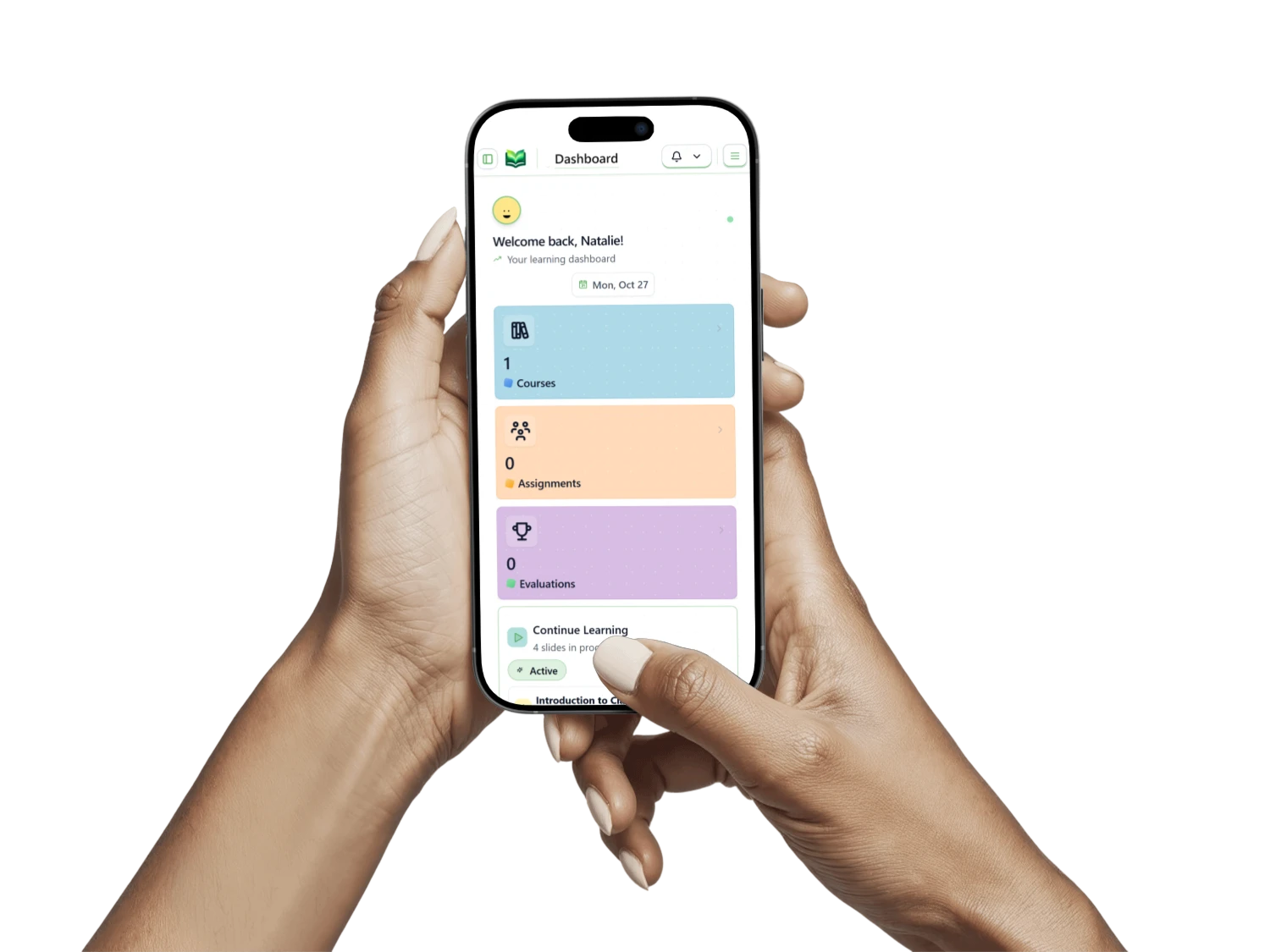
The Mobile App Is the Front Door Now
For most learners in 2026, the mobile app is the academy. That is where they attend classes, watch lessons, ask doubts, take assessments and pay fees. Asking learners to use a generic shared app or a clunky mobile website is the fastest way to look outdated. Vacademy ships every academy with a white-labelled, mobile first experience under your own brand.
From After-the-Fact Reports to Early Warnings
On legacy platforms, a struggling learner is usually discovered after they fail an exam or quietly stop showing up. Vacademy surfaces engagement, attendance and performance trends in real time, so educators can intervene with a nudge, a check-in or extra material before the learner drops off.
What a 2026 Ready Teaching Platform Looks Like
If you were designing an online teaching platform from scratch today, knowing what learners, parents and corporates expect, it would not look like a video conferencing tool with an LMS bolted on. It would look like a learning operating system. The core ingredients are clear.
- Native AI for course creation, assessments, lecture planning and feedback.
- Real time analytics on engagement and performance, not month-end PDFs.
- An automation engine that handles enrolment, attendance, reminders and renewals.
- A unified workspace that replaces five or six separate apps.
- A white-labelled, mobile first learner experience under your brand.
- Multi time zone scheduling and global payment support, by default.
- A structured way to handle doubts, instead of WhatsApp chaos.
That is the bar Vacademy was built against, and it is the bar your peers are now quietly setting in your market.
Run Your Academy on a 2026 Stack
Walk through your current setup with the Vacademy team. We will show you exactly which parts of the legacy stack to retire, and how the move usually plays out over the first 30 days.
Frequently Asked Questions
Is the legacy Zoom plus LMS plus spreadsheet stack really failing, or is this just hype?
It is not failing in the sense that classes can no longer happen. It is failing in the sense that learners, parents and corporate buyers now expect a much higher standard, personalisation, mobile, real time visibility, instant support. Academies that meet that standard pull ahead. Academies that do not, plateau.
Can we keep using Zoom and Google Meet inside Vacademy?
Yes. Vacademy integrates natively with Zoom, Google Meet and YouTube Live. The platform replaces the manual layer around them, attendance, reminders, scheduling, recordings and reports, while letting you keep the live class tools your learners already know.
We are a small academy. Is a Learning OS overkill for us?
Most of the time it is the opposite. Smaller academies are the ones being crushed by manual operations, because there are fewer people to share the load. A unified, automated platform usually has the highest impact for a lean team.
How long does it take to migrate from a traditional stack to Vacademy?
Most academies are live within one to two weeks, including basic content migration and learner onboarding. Larger institutions with multiple branches or complex legacy data typically plan a 30 to 60 day rollout in stages.
What if our team is not ready to use AI features yet?
AI features are opt in. You can run Vacademy as a clean, modern, automated platform from day one, then turn on AI for course creation, lecture planning and feedback as your team gets comfortable. You decide the pace.