Most academy founders we talk to are not on a legacy stack because they love it. They stay because switching feels expensive and risky, and the current setup mostly works. The trap is that the cost of staying never shows up as a single line item. It hides inside operations, hidden inside burnt out educators, hidden inside churned learners, hidden inside the new courses you never shipped.
This piece is a clear-eyed look at what staying on a non-AI platform actually costs an institution in 2026. The visible cost of switching is real, but the hidden cost of not switching is almost always larger. Once you can see it, the decision changes.
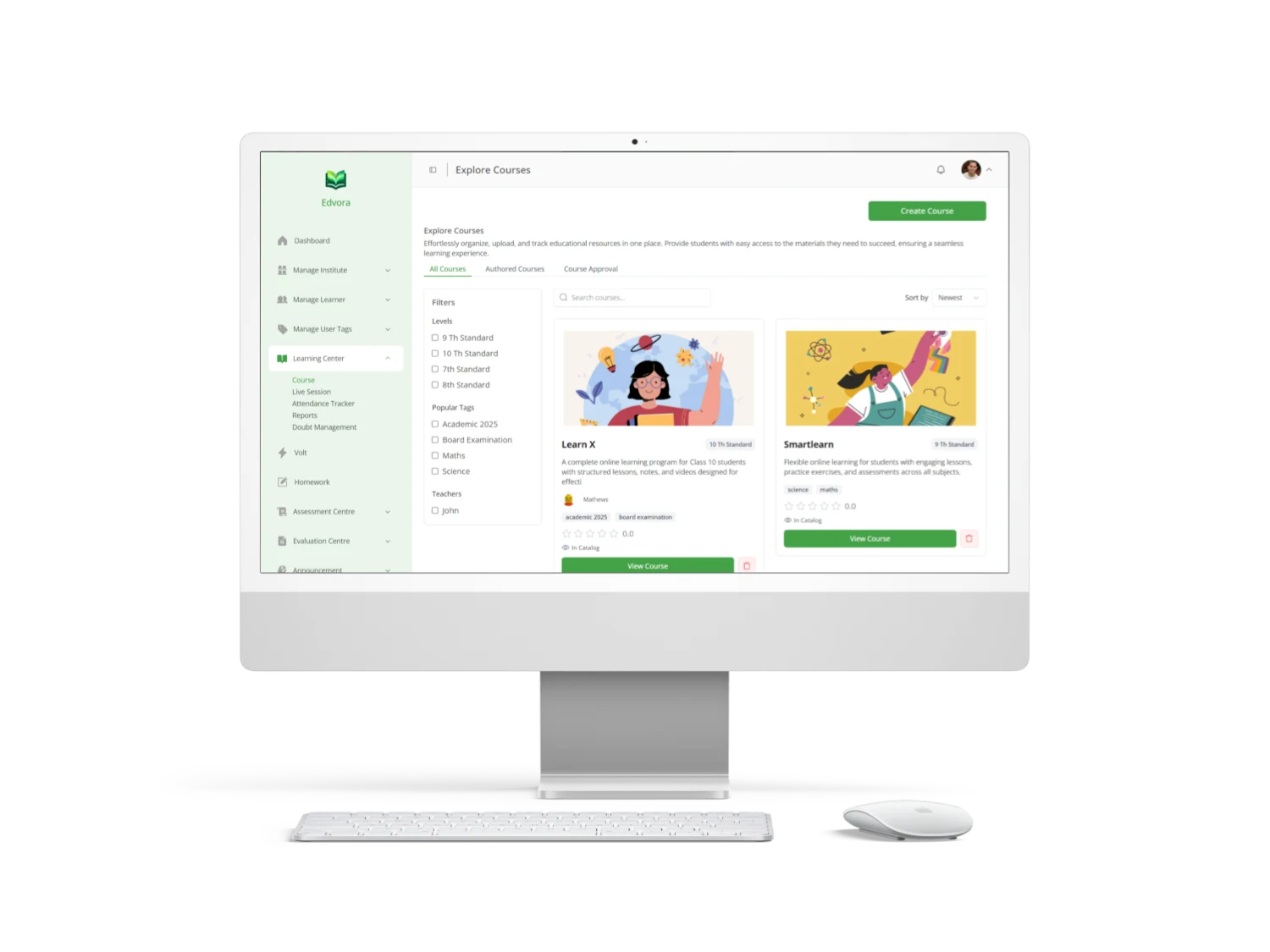
Six Hidden Costs of Staying on a Non-AI Stack
None of these show up on an invoice, but together they drain more value than any subscription fee.
Educator Time Lost to Manual Work
10 to 15 hours per teacher per weekManual content creation, quiz design, attendance entry, fee chasing and report writing eat the hours your best educators should be spending with learners. On a legacy stack, this is the largest hidden cost in any academy.
Slower Course Production
6 to 10 weeks per courseWithout AI assisted course creation, every new course is a six to ten week project. While you build, your competitors using AI publish three or four updated courses, capturing the attention you wanted.
Learner Churn You Cannot See Coming
Drop-offs after week threeWithout behavioural analytics, you only notice a learner is leaving after they have already gone. Modern AI platforms detect disengagement early and trigger interventions while there is still time to save the relationship.
Decisions Made Without Data
Gut feel instead of dashboardsWhen data lives in spreadsheets and screenshots, decisions become opinions. Pricing, scheduling, content priorities and hiring are made on instinct, often correcting two quarters later.
Talent Burnout and Attrition
The best teachers leave firstEducators do not quit teaching, they quit operational chaos. The ones with the most options find platforms where the system handles admin, so they can focus on their craft. Your top talent is a flight risk on a legacy stack.
Revenue Stuck Behind Operations
You cannot scale what you cannot automateEvery new batch, region or product on a legacy setup means another spreadsheet, another tool and another part time hire. Growth becomes painful, so you stop pushing it.
Why These Costs Compound
Each of these costs would be manageable on its own. The problem is they do not exist on their own. Slow course production means weaker offerings, which means more learner churn, which means more pressure on the sales team, which means more manual chasing, which means even less time for content. The legacy stack is a flywheel, just one that spins in the wrong direction.
AI-powered platforms reverse the flywheel. The same loop, faster content, better retention, sharper decisions, freed-up educators, now compounds in your favour. After a few quarters, the gap between an institution that upgraded and one that did not is no longer recoverable.
The Same Day, On Two Different Stacks
Six routine workflows, two very different experiences.
| Scenario | Legacy Stack | AI Powered Vacademy |
|---|---|---|
| Building a new 30 lesson course | 6 to 10 weeks of educator time | An afternoon to draft, a day to refine |
| Generating a question bank for an exam | Hours per chapter, often outsourced | Minutes per chapter with Vsmart Topics |
| Spotting a struggling learner | After they fail or unsubscribe | After two missed sessions or a drop in scores |
| Sharing weekly progress reports | Manual copy paste from sheets to email | Auto generated, sent over email and WhatsApp |
| Onboarding a new batch | Multiple manual touchpoints | One click bulk enrolment with auto sequences |
| Answering a parent's question on progress | Pull data from three tools, then reply | Open the learner's profile, send the report |
What Educators Stop Doing By Hand
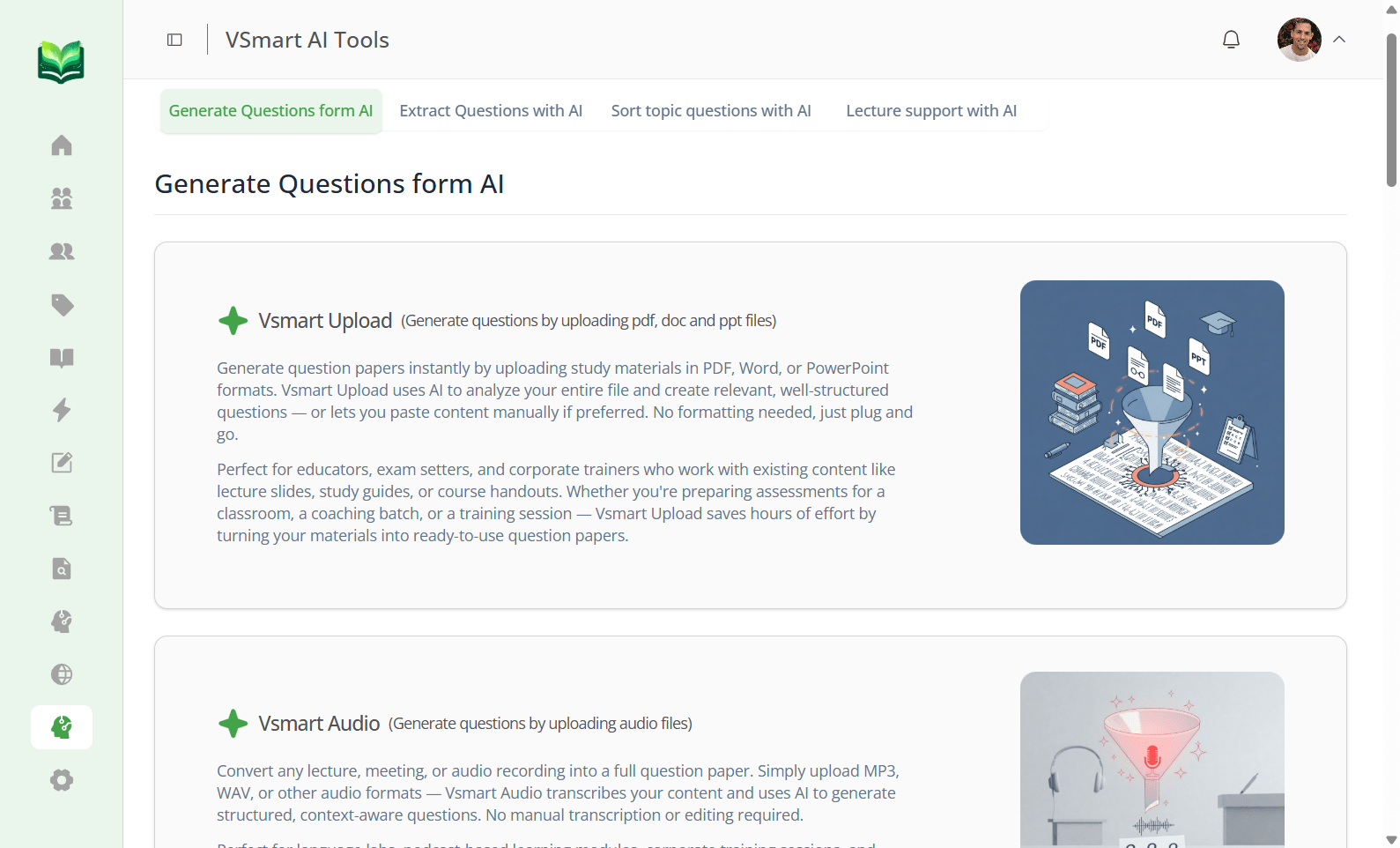
On a legacy stack, generating useful feedback for a class of fifty is a weekend project. With Vsmart Feedback, the same insights, strong topics, weak topics, recommended interventions, are produced automatically right after the assessment. Educators get to act on the data instead of compiling it.
The Automation You Are Paying For in Manual Hours
Reminders before live classes. Attendance after. Renewal nudges before subscriptions lapse. Parent reports every week. Birthday wishes. Welcome sequences for new enrolments. On a legacy stack, every one of these is a person's job. Inside an AI powered platform, they are workflows that quietly run in the background.
The Real Question Is Not Cost, It Is Cost of Delay
When teams evaluate a platform like Vacademy, the question is usually framed as cost of switching. The more useful framing is cost of delay. Every quarter on the legacy stack is another quarter of educator hours, churned learners and slow course production. Compared to that, the cost of switching is almost always small, and one time.
Institutions that upgrade do not just move faster, they redirect spend. Hours that went to manual operations move into teaching, content quality and learner support. Subscription bills consolidate. The team starts feeling like a learning organisation again, not an operations centre.
What You Recover the Moment You Upgrade
Educators Recover 10+ Hours a Week
Automation and AI handle attendance, reminders, drafts, reports and scoring. Your team gets that time back for teaching.
Course Production Speeds Up 5x
What took weeks now takes a working session. You can update content in response to learner feedback without breaking the calendar.
Retention Improves Through Early Signals
Engagement analytics surface drop-off risk early, when intervention still works. Renewal and completion rates follow.
Decisions Get Sharper
Real time dashboards on enrolment, performance, attendance and revenue replace gut feel with evidence.
Calculate Your Own Hidden Cost
Walk through your current stack with the Vacademy team. We will help you put a number on the educator hours, lost revenue and operational overhead you can recover in the next two quarters.
Frequently Asked Questions
We are profitable on our existing stack. Why upgrade?
Profitability today is not the same as competitive position tomorrow. AI powered platforms compound their lead, faster course launches, better retention, sharper analytics. Institutions that delay tend to find that the gap with peers becomes uncomfortable within two to four quarters.
Is not switching itself a hidden cost?
Switching has a real cost in time and change management. The framing that helps is cost of delay. Compare the one time cost of switching against the recurring quarterly cost of staying. For most academies, the math is clear within a single planning cycle.
What about teams that are not ready for AI?
Vacademy is designed so AI is opt in. You can run the platform with traditional manual workflows from day one and gradually turn on AI features for course creation, assessments, lecture planning and feedback. Adoption can be staged.
How quickly can we see the upside?
Most teams see educator hour savings within the first two weeks, simply from automated reminders, attendance and reports. Bigger gains in retention and revenue typically show in the first full course cycle, around 8 to 12 weeks.
What happens to our existing data and content?
Vacademy supports CSV bulk imports for learners, courses and historical records, and the team helps with structured migration. Your past content can also be fed into Vsmart Upload to be turned into modern, structured course material.